





Choosing the right swimming pool heating system can provide more comfortable pool time without unnecessary running costs. We compare a pool heat pump with solar pool heating, including performance, installation, seasonal use and Sydney conditions, so you can choose an option suited to your property, budget and swimming habits.
How Solar Pool Heating Works
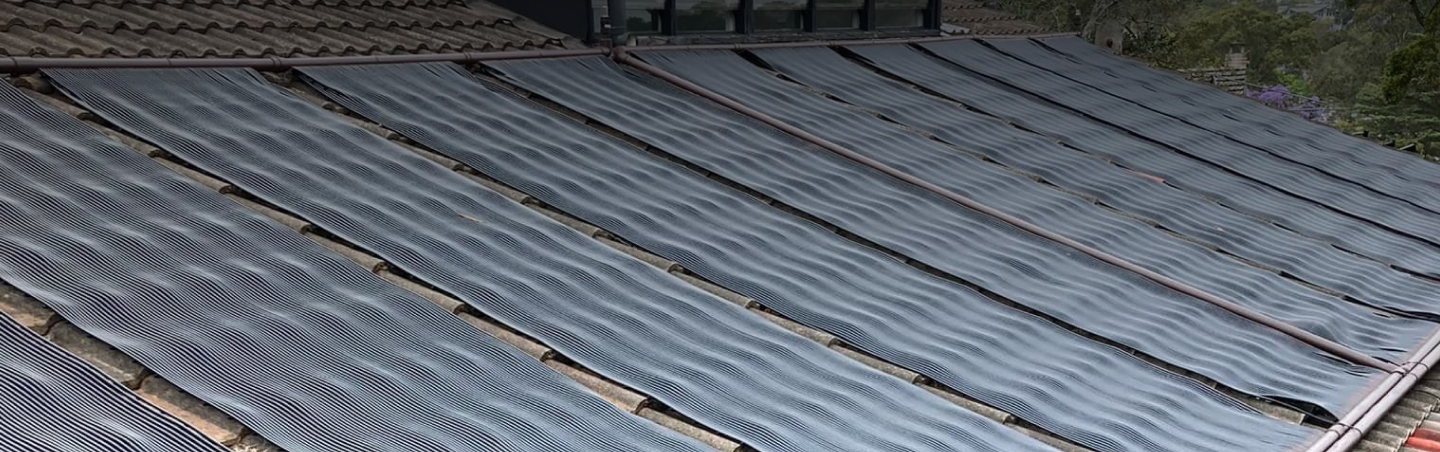
Solar pool heating circulates pool water through collectors installed on a suitable roof area. The collectors absorb heat from the sun before returning warmer water to the pool.
For many Sydney homes, this can extend swimming through spring, summer and autumn. Performance depends on sunlight, roof orientation, collector area, shade and weather.
At Thermo Pools, we manufacture Thermorush and Thermotube systems in Sydney. Panels can be custom-made for tiled, metal and complex roof layouts. Learn more about our solar pool heating systems.
How a Pool Heat Pump Works
A pool heat pump draws warmth from the surrounding air and transfers it into the pool water. It uses electricity to transfer available heat rather than creating heat through electric resistance.
Heat pumps suit properties with limited roof space, significant shade or a preference for controlled heating. They are less directly dependent on sunshine reaching rooftop collectors.
Our pool heat pump solutions include supply, installation and maintenance. Pool volume, target temperature, exposure, wind and a pool blanket all affect sizing.
Pool Heat Pump Vs Solar Pool Heating: Key Differences
Both systems improve pool comfort, but they suit different priorities.
Running Costs
Solar pool heating generally has lower ongoing heating costs because sunlight supplies the heat. Electricity is mainly used to circulate water.
A pool heat pump uses electricity whenever it operates. Costs depend on efficiency, pool size, temperature, operating hours and weather. Correct sizing and a pool blanket reduce heat loss.
Our guide to pool heating running costs in Australia compares the main cost factors for solar, heat pump and gas systems.
Heating Control
A heat pump provides greater temperature control. This suits households that swim regularly or use the pool outside the strongest solar months.
Solar heating follows available solar energy. A controller can run the system in suitable conditions, but output varies with sunlight, cloud cover and season.
Roof Space and Installation
Solar heating requires suitable roof space with reasonable sun exposure. Roof direction, slope, shade, plumbing distance and collector placement all matter.
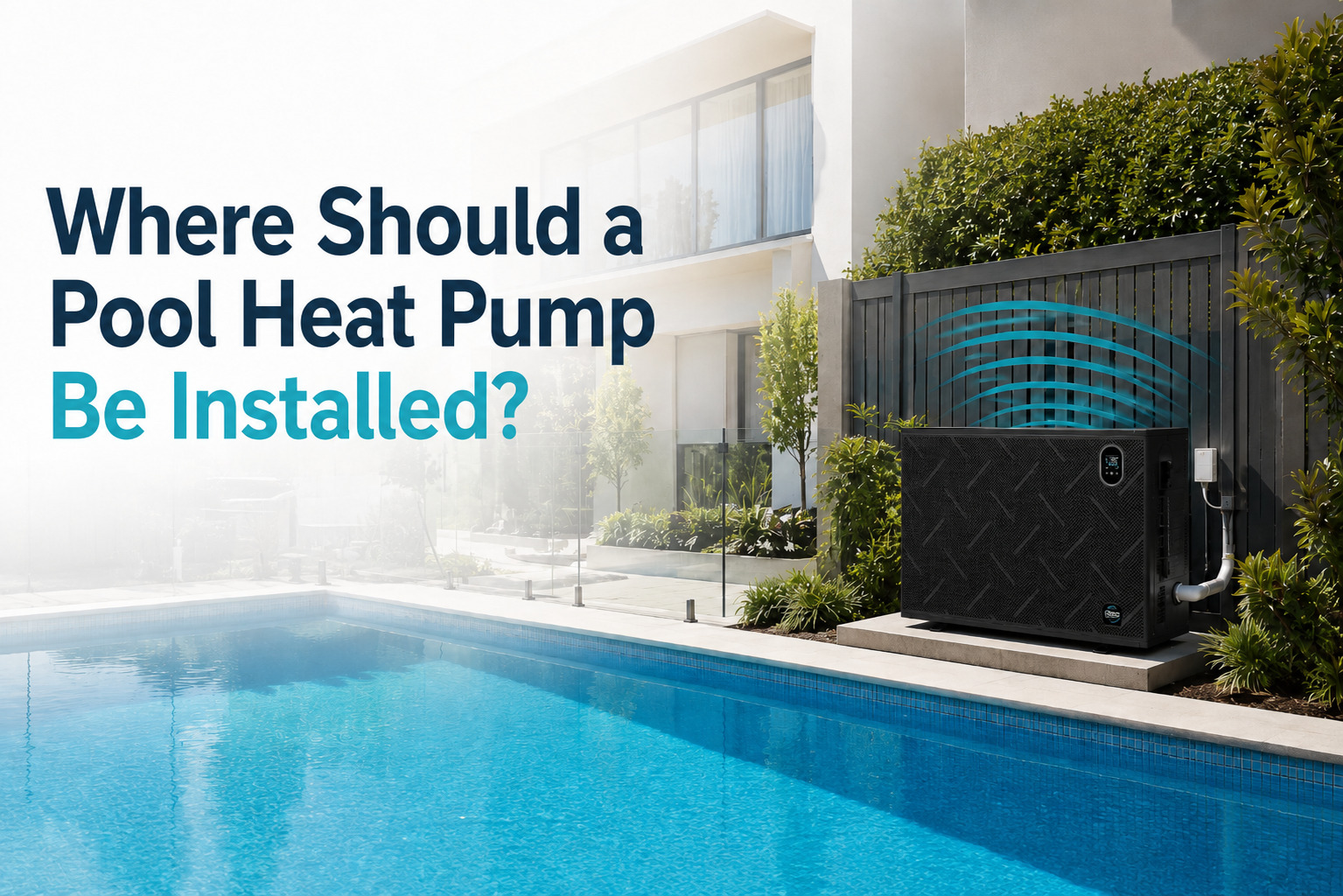
A heat pump needs no rooftop collectors, but requires outdoor space with airflow, drainage and servicing access. Placement should consider bedrooms, entertaining areas and neighbours.
Our article on where to install a pool heat pump to reduce noise concerns explains practical positioning factors for Sydney homes.
Seasonal Performance
Solar heating performs best when Sydney sunlight and daytime conditions support heat collection. It suits extending the swimming season rather than guaranteeing one temperature in every condition.
A pool heat pump can operate across a broader range of conditions, although efficiency changes with air temperature. It may be preferable when consistent heating matters more than achieving the lowest possible running cost.
Maintenance
Both systems benefit from correct installation and periodic checks.
Solar systems may need inspections of collectors, plumbing, pumps and controllers. Sydney conditions include strong UV exposure, storms, wind and cockatoo activity, so durable materials and suitable installation methods are important.
Heat pumps need clear airflow, clean coils and sound connections. Leaves, restricted ventilation and poor placement can reduce performance.
Which System Is Better for Sydney Homes?
Solar pool heating may be the better choice when:
- You have suitable sunny roof space.
- Low ongoing heating costs are a priority.
- You mainly want to extend the warmer swimming season.
- You prefer an Australian-made solar solution.
A pool heat pump may be better when:
- Your roof is shaded, limited or unsuitable.
- You want more temperature control.
- You plan to swim across a longer part of the year.
- You have a suitable outdoor position with good airflow.
Some homes can use both systems. Solar provides low-cost heating in sunny periods, while a heat pump supports control when conditions are less favourable.
Factors We Assess Before Recommending a System
No single swimming pool heating option suits every Sydney property. Before recommending solar pool heating or a pool heat pump, we consider:
- Pool size and water volume
- Preferred swimming temperature
- Months the pool will be used
- Roof area, direction, pitch and shade
- Space around the filtration equipment
- Wind exposure and evening heat loss
- Existing plumbing and electrical capacity
- Use of a fitted pool blanket
- Installation budget and expected running costs
This assessment helps prevent undersizing and poor placement.
Our Recommendation
For many Sydney homeowners with good roof exposure who mainly want a longer swimming season, solar pool heating offers an attractive balance of performance and low running costs. For homes needing more predictable temperature control, limited by roof space or aiming for broader seasonal use, a pool heat pump can be the stronger choice.
At Thermo Pools, we have worked with pool heating systems for decades and can assess your pool, property and intended use before recommending a solution. Request a quote to compare suitable solar and heat pump options for your Sydney home.
Frequently Asked Questions
Is Solar Pool Heating Cheaper to Run Than a Heat Pump?
Solar heating generally has lower ongoing heating costs because it uses energy from the sun. Actual costs still depend on pump operation, system design and usage.
Can a Pool Heat Pump Work During Cloudy Weather?
Yes. A heat pump draws heat from the surrounding air, so it can operate without direct sunshine. Efficiency and heating speed may vary with outdoor temperature.
Does Solar Pool Heating Work in Winter in Sydney?
Solar systems can collect heat on suitable sunny days, but performance is lower during cooler months. They are usually best for extending the swimming season.
Do I Need a Pool Blanket With Either System?
A pool blanket is strongly recommended. It reduces evaporation and overnight heat loss, helping both systems maintain water temperature more efficiently.
How Do I Know What Size Heat Pump I Need?
Sizing depends on pool volume, target temperature, seasonal use, exposure, wind and heat loss. A professional assessment helps select an appropriate unit.
Can Solar Heating Be Added to an Existing Pool?
Often, yes. Suitability depends on roof space, solar exposure, plumbing access and the existing filtration setup. An on-site assessment can confirm the practical installation approach.