






A correctly positioned pool heat pump can warm your water efficiently without disturbing your household or neighbours. In this guide, we explain where to place the unit, which locations to avoid, and what Sydney pool owners should consider before installation.
Why Pool Heat Pump Position Matters
Pool heat pumps use a fan and compressor to draw heat from the air and transfer it into the pool water. Modern inverter models can be quiet, but every unit produces some mechanical and airflow noise.
The same unit can sound different depending on its location. In an open equipment area, it may be barely noticeable indoors. In a narrow passage, beneath a bedroom window or beside a neighbour’s entertaining area, the sound may seem much stronger.
That is why we consider property layout as carefully as heater size when installing pool heat pumps in Sydney.
Keep It Away From Bedrooms and Neighbouring Homes
Create as much practical distance as possible between the heat pump and noise-sensitive areas, including:
- Bedrooms and living rooms
- Neighbouring windows
- Patios and outdoor dining areas
- Home offices
- Shared boundaries on compact blocks
Distance allows sound to reduce before reaching another person. Where space is limited, fan direction and surrounding surfaces become even more important.
The unit should ideally face an open part of your property rather than a neighbour’s window or fence. The house may provide separation, provided it does not block required airflow.
Avoid Narrow Passages and Enclosed Corners
A side passage may look convenient, but hard walls, metal fencing and paving can reflect noise and create a sound channel.
Enclosed corners may also cause discharged air to return to the heat pump. This can reduce efficiency and make the system work harder.
A heat pump needs clear space around its air intake and outlet. Exact requirements vary between models, so installation must follow the manufacturer’s clearances. Avoid a sealed shed, low stairs or solid screening that blocks ventilation.
Direct the Fan Outlet Carefully
The fan outlet should not point directly towards a neighbour’s property, an open bedroom window, a nearby solid wall or a frequently used seating area.
Directing the fan towards an open yard allows air and sound to disperse more naturally. It also helps stop discharged air from returning to the intake.
Different pool heaters have different fan arrangements, so we assess the model and site before deciding on the final orientation.
Use a Stable Base and Control Vibration
Some unwanted sound comes from vibration. A heat pump placed on uneven pavers, loose decking or an unstable frame may rattle or transfer vibration into nearby structures.
The unit should sit on a firm, level base suited to its weight. Correctly selected anti-vibration mounts may help. Pipework should be supported so vibration does not travel through pipes, brackets or an enclosure.
Avoid mounting the unit against a lightweight wall connected to a bedroom or living area unless the installation has been designed for it.
Leave Room for Airflow and Servicing
Technicians need safe access for inspections, cleaning and repairs. Crowding the unit between fencing, plants and filtration equipment can make maintenance difficult.
Leaves and debris can restrict the coil. Keeping the area open helps the heat pump operate efficiently.
Our guide to how an Oasis pool heat pump works explains how the fan, compressor and heat exchanger work together.
Be Careful With Screens and Enclosures
An acoustic screen may help when a unit must sit near a boundary, but it needs careful design. A barrier placed too close can restrict airflow or redirect sound towards another property.
Any screen should allow the required clearances, intake and discharge airflow, weather protection and service access. Seek site-specific advice instead of building a sealed box around the heat pump.
Plan Suitable Operating Times
Sound that seems minor during the day may be more noticeable at night or early in the morning. Sydney homeowners should check current NSW noise rules and local council requirements for residential equipment.
A practical approach is to program the system so it maintains the preferred temperature during suitable daytime hours where possible. Timers and modern controls make this easier.
Inverter pool heat pumps may reduce fan and compressor speed once the water is near the selected temperature. A pool blanket can also reduce heat loss and operating time.
For a wider comparison, read our guide to gas, solar and heat pump running costs.
Could Solar Pool Heating Be a Better Fit?
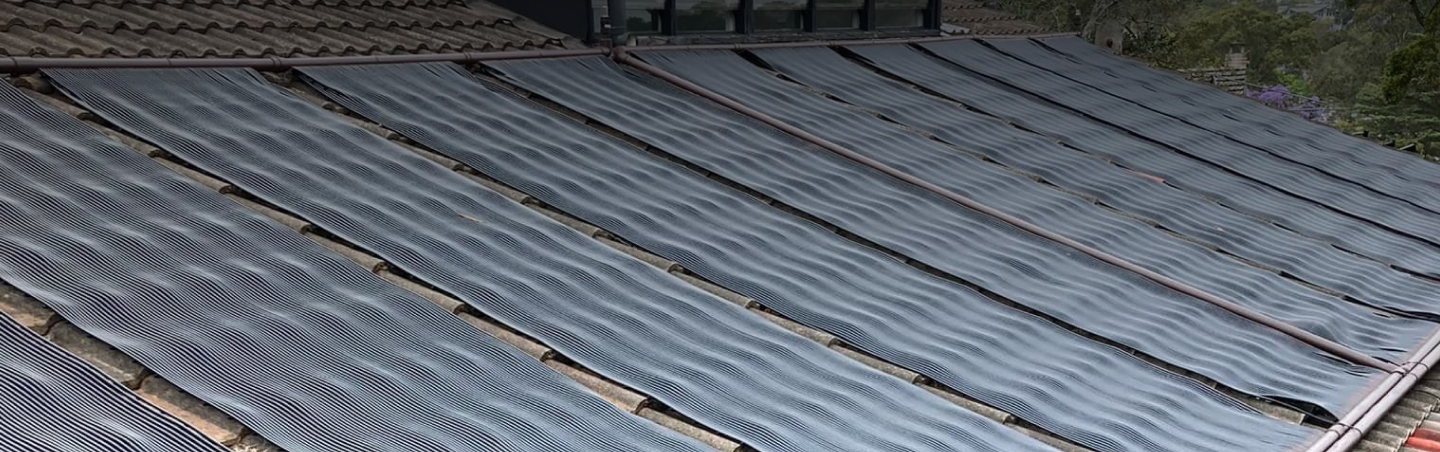
Some properties have no suitable ground-level location for a heat pump. In that situation, solar pool heating may suit homes with suitable roof space and sunlight.
Solar heating for a pool circulates water through roof-mounted collectors and does not require an outdoor heat pump fan or compressor. The circulation pump still needs sensible placement and operating times.
Heat pumps suit dependable temperature control in changing weather, while solar pool heating in Sydney is often chosen for low running costs and a longer swimming season. The right choice depends on roof space, shade, target temperature and property layout.
Arrange a Site-Specific Installation
There is no single position that suits every home. The best location balances distance from neighbours, open airflow, stable mounting, pipe length, electrical access, service space and manufacturer requirements.
Thermo Pools supplies, installs and maintains Oasis pool heat pumps for Sydney homes and commercial pools. We can assess your equipment area, explain the available pool heaters and recommend a practical location designed for efficient operation with minimal noise impact. Request a quote to discuss your pool and property layout.
Frequently Asked Questions
How noisy is a pool heat pump?
Noise varies by model, fan speed and installation position. Even a quiet unit can become noticeable near bedrooms, boundaries or reflective walls.
Where should a pool heat pump be installed to reduce noise?
Choose a well-ventilated position with adequate clearance and as much separation as practical from bedrooms and neighbours.
Can a wall or fence make heat pump noise worse?
Yes. Hard surfaces can reflect sound, particularly in narrow side passages, so location should consider both airflow and acoustics.
Will an enclosure reduce pool heat pump noise?
It may reduce direct sound, but poor ventilation can harm performance. Any acoustic treatment must maintain the airflow required by the unit.
What can I do if my existing heat pump is too loud?
Check for vibration, loose panels, blocked airflow and poor mounting. Thermo Pools can assess whether servicing, isolation or relocation is appropriate.
Can Thermo Pools help plan a quieter heat pump installation?
Yes. Thermo Pools can consider unit selection, airflow, setbacks, nearby rooms and boundaries before installation.