






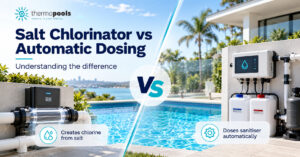
Salt chlorinators and automatic dosing systems both help keep pool water sanitised, but they do it in different ways. In this guide, we explain how a salt chlorinator compares with a pool chlorine dosing system, what each system actually adds to your pool, how much control you get over chlorine and pH, and which option may suit the way you use and maintain your pool.
Salt Chlorinator vs Automatic Dosing: The Short Answer
A salt chlorinator generates chlorine from salt or minerals already dissolved in the pool water. Water passes through the chlorinator cell, where the system produces chlorine to sanitise the pool.
An automatic chlorine dosing system adds measured amounts of sanitiser directly into the pool circulation system. Depending on the system, it may dose chlorine, pH adjuster, or both.
The important point for pool owners is that both systems ultimately help maintain sanitised water. The main difference is where the chlorine comes from and how its level is controlled.
How Does a Salt Chlorinator Work?
A salt chlorinator uses salt or suitable minerals dissolved in the pool water as the source material for chlorine production.
As pool water passes through the chlorinator cell, the system converts the dissolved salt into chlorine. That chlorine then sanitises the water as part of the normal pool filtration cycle.
Modern salt chlorinators can provide considerably more control than simply turning chlorine production on or off. Depending on the model, features can include:
- Adjustable chlorine output
- Filtration timers
- Pool and spa operating modes
- Self-cleaning chlorinator cells
- Automatic sanitation controls
- Integrated pH or sanitiser monitoring on more advanced systems
For example, Thermo Pools supplies salt chlorinators ranging from straightforward automatic sanitation systems through to models designed to monitor sanitiser levels and pH.
Does a salt pool still use chlorine?
Yes. This is one of the most important terminology points to understand.
A saltwater pool is still a chlorinated pool. The salt chlorinator simply produces the chlorine on site from dissolved salt or minerals, rather than relying on the pool owner to manually add chlorine each time it is required.
This distinction is useful when comparing salt chlorination with chemical dosing because the end goal is similar, but the method of supplying sanitiser is different.
What Is a Pool Chlorine Dosing System?
A pool chlorine dosing system is designed to deliver controlled quantities of sanitiser into the pool water. Instead of generating chlorine from salt, the dosing equipment uses a supply of liquid sanitiser and meters it into the circulation system.
Some dosing systems work according to a preset daily dosing volume. More advanced automatic controllers can continually monitor water conditions and adjust sanitiser or pH dosing according to programmed settings.
Thermo Pools’ range of chlorine dosing systems includes systems designed for sanitiser dosing, pH adjustment and combined automatic water management. This can reduce the amount of routine manual chemical addition required while providing more controlled dosing.
Salt Chlorinator vs Pool Chlorine Dosing System: Key Differences
The best choice therefore depends on more than whether you want an “automatic” system. You also need to consider how you want chlorine produced, the level of water chemistry control you want and how your existing pool equipment is configured.
Is Automatic Dosing More Advanced Than a Salt Chlorinator?
Not necessarily. The term “automatic dosing” can make it sound as though every dosing system provides more automation than every salt chlorinator, but modern pool equipment does not fit neatly into that distinction.
A basic salt chlorinator may automatically generate chlorine according to programmed operating times and output levels. A more advanced chlorinator can also monitor sanitiser levels and help control pH.
Similarly, a chemical dosing system can range from a relatively simple adjustable dosing pump to an advanced controller that continuously monitors water conditions and responds by dosing the required chemicals.
When comparing equipment, we recommend looking at the actual control functions of the system, rather than making the decision based only on whether it is described as a chlorinator or doser.
Which System Is Better for a Residential Pool?
There is no single answer for every swimming pool. For many residential pools, a salt chlorinator offers a convenient way to automate chlorine production as part of the filtration system. Once the correct salt level and chlorinator settings are established, the system can generate sanitiser while the pool equipment operates.
An automatic dosing system may be worth considering when you want chlorine or pH-adjusting chemicals delivered at controlled rates from a separate chemical supply.
Your decision can depend on factors such as:
- Pool volume
- Existing filtration and sanitation equipment
- Current salt or mineral levels
- How frequently the pool is used
- Desired level of automation
- Whether automated pH control is required
- Available equipment space
- Ongoing testing and maintenance preferences
Pool chemistry requirements can also change throughout the year as water temperature, swimming activity and environmental conditions change.
Our guide on how to clean your pool quickly explains some of the broader equipment and water maintenance considerations involved in keeping a pool ready for use.
What About pH Control?
Chlorine is only one part of water management. Maintaining suitable pH is also important because water balance affects how effectively the sanitiser can operate.
This is where the difference between individual products becomes especially important. Some automatic dosing systems are specifically designed to dose sanitiser, pH adjuster, or both. Advanced systems may measure the condition of the water and make adjustments according to configured levels.
Some premium salt chlorinator systems also incorporate pH and sanitiser monitoring, bringing chlorine generation and broader water management into one system.
If reducing routine manual adjustment is a priority, look at whether the equipment controls chlorine only or both sanitiser and pH.
Do Automatic Systems Remove the Need for Pool Testing?
Automatic chlorination and dosing can make water management easier, but pool owners should still monitor water quality and maintain their equipment.
Sensors, chlorinator cells, pumps, filters and dosing components all need to operate correctly for an automated system to perform as intended.
Seasonal maintenance remains important too. Our winter pool maintenance guide covers practical checks that can help keep pool equipment and water conditions managed during periods of lower use.
The aim of automation is to make pool care more consistent and convenient, rather than eliminating the need to check the pool altogether.
Can a Salt Chlorinator and Automatic Dosing Features Be Combined?
Yes. This is where terminology can become confusing. Some advanced salt chlorinator systems combine chlorine generation with additional water-management features such as pH sensing and automatic adjustment.
The Viron eQuilibrium range available through Thermo Pools is an example of a chlorinator system with options for sanitiser and pH management.
This means the choice is not always simply:
Salt chlorinator OR automatic dosing.
For some pool owners, an integrated chlorination and water-control system may provide the functionality they are looking for.
Choosing the Right Pool Sanitising System in Sydney
For Sydney pool owners, the best system should suit the size and setup of the pool as well as how you prefer to manage ongoing water maintenance.
At Thermo Pools, we supply a broad range of pool equipment, including salt chlorinators and chlorine dosing systems, with options covering straightforward residential sanitation through to more advanced automated control.
Before selecting equipment, it is worth checking your existing filtration system, pool volume, current sanitation setup and the level of automation you actually need. Correct equipment selection can make day-to-day pool management simpler while helping you maintain more consistent water conditions.
Salt Chlorination or Automatic Dosing? Talk to Thermo Pools
A salt chlorinator and a pool chlorine dosing system can both automate important parts of pool sanitation, but they work differently.
Choose a salt chlorinator when you want your system to generate chlorine from salt or minerals already in the pool. Consider automatic chemical dosing when you want measured sanitiser or pH chemicals supplied directly from a separate source. If you want greater automation, compare advanced systems that combine sanitiser monitoring with pH control.
Thermo Pools has been operating since 1975 and supplies pool equipment for homeowners across Sydney and nearby areas. Request a quote from Thermo Pools to discuss your existing pool setup and the chlorination or dosing equipment best suited to your requirements.
Frequently Asked Questions
1. What is the main difference between a salt chlorinator and chlorine dosing system?
A salt chlorinator generates chlorine from salt or suitable minerals dissolved in the pool water. A chlorine dosing system feeds measured amounts of sanitiser from a separate chemical supply into the pool circulation system. Both help sanitise the water, but the source and delivery method are different.
2. Does a salt chlorinator mean my pool is chlorine-free?
No. A salt chlorinator creates chlorine from dissolved salt or minerals. The pool is still sanitised using chlorine, but the chlorine is generated through the chlorinator rather than being manually added in the same way as liquid or granular chlorine.
3. Can a pool chlorine dosing system control pH as well?
Yes, some systems can. Certain dosing controllers can manage sanitiser and pH-adjusting chemicals. The exact functionality depends on the model, so check whether the equipment provides chlorine dosing only or combined sanitiser and pH control.
4. Are all salt chlorinators fully automatic?
The amount of automation varies between systems. Some provide timers and adjustable chlorine output, while more advanced chlorinators can include sanitiser monitoring, pH management and additional automatic controls.
5. Do I still need to test my pool water with an automatic dosing system?
Regular water monitoring is still important. Automated equipment can make sanitiser and pH management more consistent, but pool conditions and equipment performance should still be checked as part of normal pool maintenance.
6. Which is better, salt chlorination or automatic chemical dosing?
The better option depends on your pool size, existing filtration system, preferred sanitising method and desired level of automation. A salt chlorinator may suit owners who prefer chlorine generation from salt, while a dosing system may suit pools requiring controlled delivery of sanitiser or pH-adjusting chemicals.