



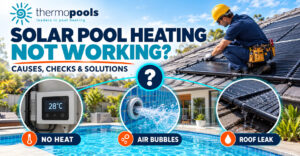
When solar pool heating stops warming the water, the problem may involve circulation, controller settings, valves, sensors, air in the lines, leaks or damage to the collectors. Start with safe ground-level checks, record what the system is doing and avoid climbing onto the roof.
This guide explains the most common symptoms, what a pool owner can check safely and when professional diagnosis is the better option. If your system needs specialised work, use a Sydney solar pool heater repair service rather than attempting roof or electrical repairs yourself.
Quick Checks Before Troubleshooting
Confirm that the pool pump and filter are operating normally. Check the water level, clean the skimmer and pump baskets, and follow the filter manufacturer’s instructions if pressure or flow appears abnormal.
Check the solar controller display, temperature settings and operating mode. Make sure the system has not been left in manual-off or winter mode. If the controller displays an error, record the code before resetting anything.
Look at accessible pipework and equipment for dripping water, loose fittings, unusual noises or air entering the return line. Do not open live electrical equipment or access roof-mounted components.
Common Reasons Solar Pool Heating Stops Working
1. Insufficient water flow
Solar heating relies on adequate circulation. A clogged basket, dirty filter, incorrect valve position, blocked line or pump problem can reduce the amount of water reaching the collectors. Weak return flow, air bubbles or changing pump noise may indicate a circulation issue.
2. Controller or sensor problems
An automatic controller uses temperature information to decide when useful solar heat is available. Incorrect settings, a failed sensor, damaged wiring or a controller fault can stop the solar circuit from operating correctly. Compare the display with the system manual and arrange testing if readings appear implausible.
Thermo Pools supplies replacement solar controllers, but the correct controller and sensor arrangement must match the installed system.
3. Incorrect valve position
Manual or automatic valves direct water through the solar circuit. A valve that is closed, partly closed, reversed or not responding can prevent heating. Ask the installer to label the normal operating positions and avoid forcing a valve that is difficult to move.
4. Air entering the solar circuit
Some air may be heard when a roof-mounted system starts or drains, but persistent bubbles or loss of prime can indicate an air leak, poor connection, restricted flow or another circulation problem. The cause should be found rather than repeatedly adding water or changing settings.
5. Leaking pipework or collectors
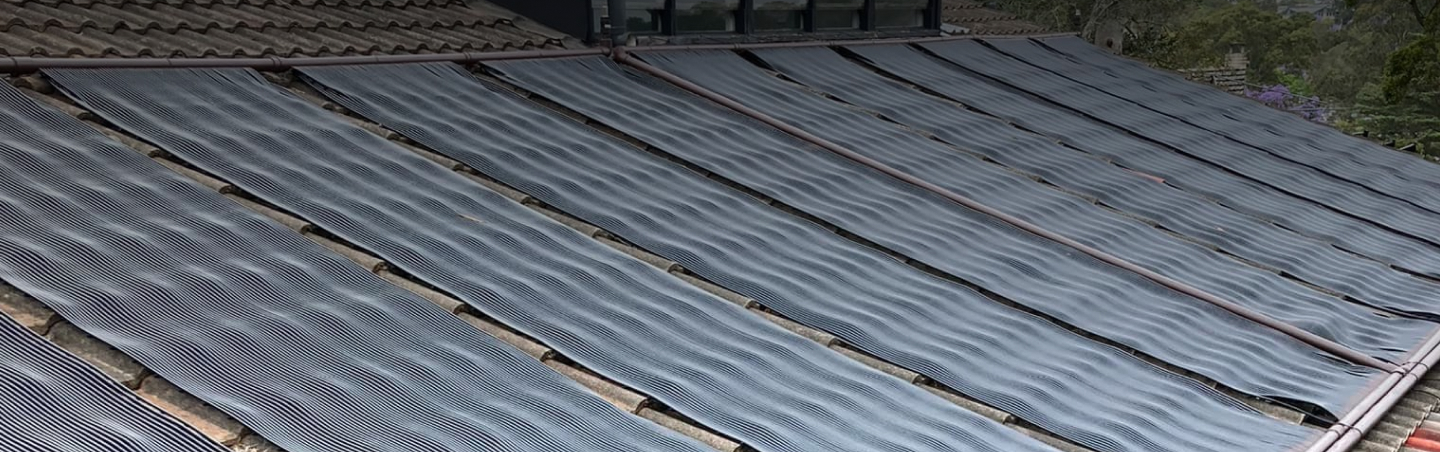
Leaks may appear around accessible fittings, pipe joints or roof-mounted collectors. Turn the solar circuit off if water is escaping and arrange an inspection. Roof access is hazardous, and temporary sealants can hide rather than solve the underlying problem.
6. Collector damage or poor exposure
Storms, branches, animals, ageing materials or previous roof work can damage collectors. New shade from vegetation or building changes can also reduce performance. A technician can inspect the collector field and distinguish physical damage from normal seasonal variation.
7. Weather and heat-loss conditions
A system may be operating correctly but produce less heating during cloudy, cool or windy conditions. An uncovered pool can also lose heat quickly. Compare performance over several suitable sunny days and use a pool cover where practical before assuming there is a fault.
Safe Maintenance That Can Reduce Problems
- Keep pool-water chemistry within the ranges recommended for the pool and equipment.
- Clean baskets and maintain the filter so the system receives reliable water flow.
- Check accessible pipework and equipment for leaks or changes in sound.
- Review controller settings at the beginning of the swimming season.
- Trim vegetation that creates new shading, without accessing the roof.
- Arrange professional inspection after roof work, severe storms or visible collector damage.
Preventative maintenance can reduce avoidable faults and help owners identify changes before they become larger problems.
When Should You Call a Technician?
Arrange professional help when the controller reports persistent errors, water leaks from the roof, the pump repeatedly loses prime, flow remains poor after normal pool maintenance, or the collectors appear damaged. Electrical faults, roof work and pressure testing require suitable skills and equipment.
Before calling, note the controller message, weather conditions, pump behaviour, visible leaks and any recent pool or roof work. This information can shorten diagnosis.
Can an Existing System Be Upgraded?
Some systems can be repaired with replacement controls, valves, pipework or collector sections. Others may be better assessed for redesign or replacement, particularly when roof conditions or pool-use goals have changed. Read about retrofitting solar heating to an existing pool if the current arrangement no longer meets your needs.
Frequently Asked Questions
Why is the water returning from the roof not very warm?
The temperature rise per pass may be modest because the system is designed to move a useful volume of water. Weather, flow rate and heat loss all affect the result. The overall pool temperature over time is more informative than one brief touch test.
Why does the system make bubbling sounds?
Brief sounds may occur as the system starts or drains. Persistent bubbles can point to air entering the circuit, low water level, restricted flow or a connection problem.
Should solar heating run at night?
Solar collectors normally need useful solar energy to add heat. An automatic controller should prevent operation when the roof is not warmer than the pool, subject to its settings and design.
Can I repair a leaking roof collector myself?
Roof access and pressurised water systems create safety risks. Turn off the affected circuit and arrange professional assessment rather than attempting an improvised roof repair.
Get Help With Solar Pool Heating Problems
If safe checks do not identify the problem, contact Thermo Pools with the symptoms, controller information and system age. We can discuss the next diagnostic step and whether servicing, repair or replacement is appropriate.