





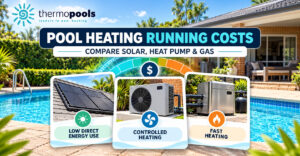
Pool-heating running costs depend on the system, pool size, weather, target temperature, operating schedule, energy tariff and heat loss. Solar normally has low direct heating-energy costs, heat pumps use electricity efficiently, and gas offers rapid heating with fuel costs that vary with use.
A reliable comparison must use the same pool, climate and swimming goal. This guide explains the cost drivers and shows how to compare solar pool heating systems, pool heat pumps and gas pool heaters without relying on a single generic annual figure.
What Determines Pool-Heating Running Cost?
- Pool surface area and water volume.
- Starting and target water temperature.
- Swimming season and hours of operation.
- Air temperature, wind, humidity and sunlight.
- Pool cover use and other sources of heat loss.
- Equipment size, efficiency, condition and controls.
- Electricity or gas tariff, including time-of-use pricing.
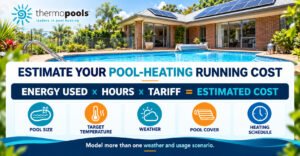
The useful calculation is energy consumed multiplied by the applicable tariff. Installation price, servicing and equipment life should be considered separately from day-to-day energy use.
Solar Pool-Heating Costs
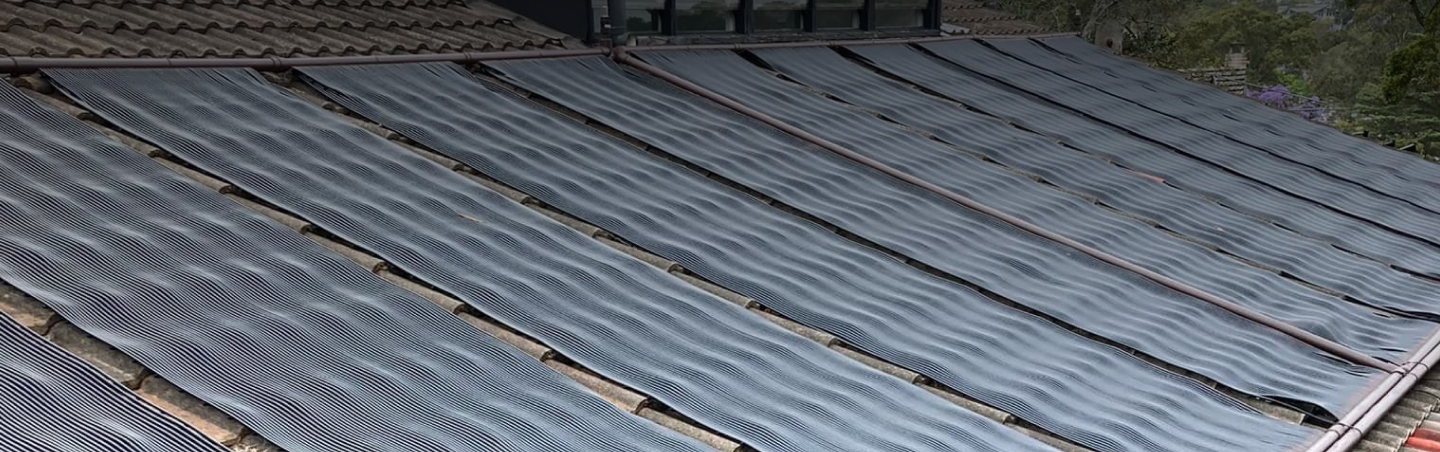
Solar thermal collectors use available sunlight to warm circulating pool water. The solar energy itself is free, but pumps and controllers use electricity. Actual electricity use depends on whether the system shares filtration runtime or uses a separate pump and on how long circulation is required.
Solar is usually best suited to owners who have suitable collector space and want to extend swimming through warmer months. Performance varies with weather, roof exposure and heat loss, so it should not be presented as guaranteed year-round heating.
Heat-Pump Pool-Heating Costs
A heat pump uses electricity to transfer heat from the surrounding air into the pool. Running cost depends on the unit’s efficiency under actual conditions, ambient temperature, target temperature, pool size and runtime.
Heat pumps can provide controlled heating through a wider range of conditions than solar, but they still use electricity and normally run longer when the weather is cool or the target temperature is high. Product efficiency figures should be compared at relevant test conditions.
Gas Pool-Heating Costs
Gas heaters can raise water temperature quickly and may suit spas, occasional use or pools that need fast recovery. Fuel consumption can make frequent or continuous heating expensive, particularly for large uncovered pools.
Compare natural gas and LPG separately and use the equipment input rating, expected runtime and local tariff. Do not assume a national annual cost applies to every property.
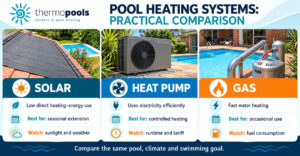
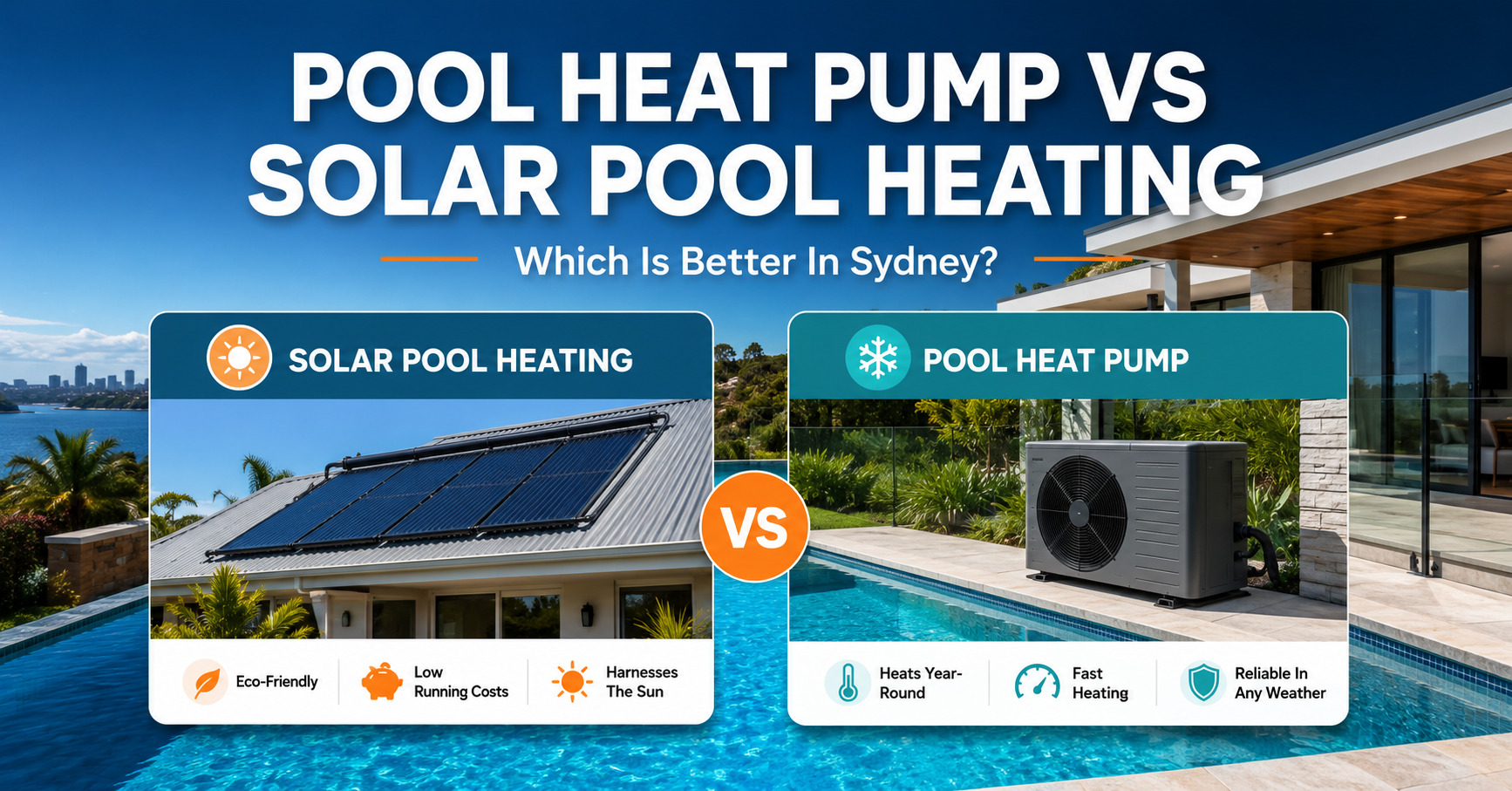
Solar vs Heat Pump vs Gas: Practical Comparison
Choose solar when
- The roof or mounting area has useful sun exposure.
- The main goal is a longer season rather than a guaranteed temperature in all weather.
- Low ongoing energy use is a priority.
Choose a heat pump when
- More consistent temperature control is required.
- There is suitable equipment space, airflow and electrical capacity.
- The expected swimming season justifies the electricity use.
Choose gas when
- Fast heating is more important than lowest operating cost.
- The pool or spa is heated occasionally.
- A suitable gas supply and compliant installation are available.
How to Estimate Your Own Running Cost
Ask for the equipment’s expected input power or fuel consumption under your proposed operating conditions. Multiply that consumption by expected hours of use and the current tariff. Model more than one weather and usage scenario.
For solar, include any additional pump electricity. For a heat pump, use realistic efficiency data for the expected air and water temperatures. For gas, include the appliance input and local fuel tariff. Add estimated servicing only when it is clearly separated from energy use..
How to Reduce Pool-Heating Costs
- Use a suitable pool cover to reduce evaporation and overnight heat loss.
- Set a realistic target temperature.
- Heat for the actual swimming schedule instead of maintaining unnecessary temperature.
- Keep filters, baskets and water flow in good condition.
- Use correctly sized equipment and suitable controls.
- Review time-of-use tariffs before scheduling electric equipment.
- Protect the pool from excessive wind where practical.
The cheapest strategy is often reducing heat loss before increasing heater capacity. Our pool-heating options guide explains which systems suit different swimming goals.
Frequently Asked Questions
Which pool-heating system is cheapest to run?
Solar often has low direct heating-energy costs, but suitability and performance depend on collector space and sunlight. A heat pump may provide more control with electricity use, while gas is commonly selected for rapid, occasional heating.
How much does a pool heat pump cost to run?
Calculate the unit’s electricity input, expected runtime and tariff. Runtime changes with weather, pool size, target temperature and heat loss, so a property-specific estimate is more useful than a universal figure.
Does a pool cover reduce running cost?
Yes. A cover can reduce evaporation and heat loss, allowing any heating system to run less. The actual saving varies with climate, cover use and operating conditions.
Can rooftop solar PV reduce heat-pump cost?
Daytime PV generation may offset some grid electricity when production and heat-pump operation coincide. The result depends on system size, household demand, export arrangements and weather.
Compare Pool-Heating Costs for Your Property
For a property-specific comparison, contact Thermo Pools with the pool dimensions, location, preferred temperature and swimming schedule. We can discuss suitable systems and the information needed to estimate operating conditions.