



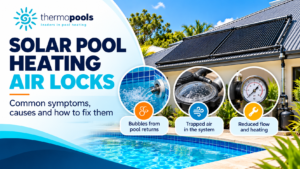
Your solar pool heating system is running, but the water isn’t warming up as expected. You might notice bubbles coming from the pool returns, gurgling noises in the pipes or weaker water circulation than usual. These symptoms can indicate trapped air in the solar heating system.
A solar pool heating air lock occurs when trapped air interferes with the normal flow of water through the system. However, not every air bubble means something is wrong. A short burst of bubbles when the solar heating starts is often normal as air is pushed out of the rooftop collectors.
The important thing is knowing when the air should clear naturally, what could be causing persistent problems and when your system needs professional attention.
What Is an Air Lock in a Solar Pool Heating System?
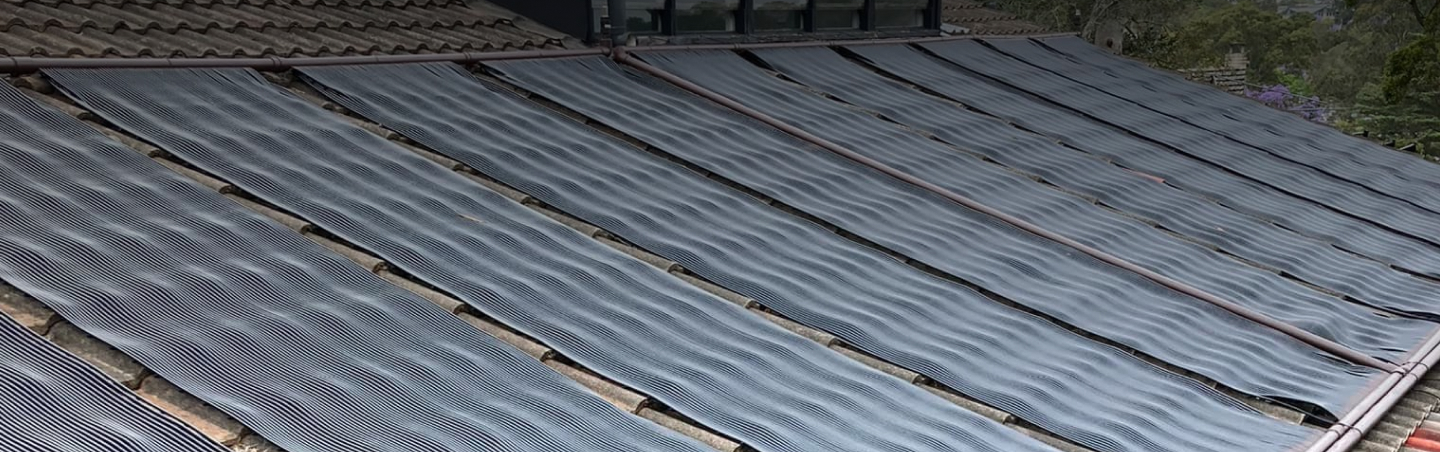
A solar pool heating system circulates pool water through solar collectors, typically installed on the roof. The water absorbs heat from the sun before returning to the swimming pool. Because the collectors sit above pool level, air may enter the pipework when the system drains after switching off. When the pump starts again, water fills the collectors and pushes that air towards the pool.
This initial release of air is a normal part of many solar heating systems. An air lock becomes a problem when air remains trapped and restricts circulation. Persistent bubbles can also indicate that new air is entering the system through a plumbing leak, an issue with the pump or a vacuum relief valve.
In these situations, the heating system may struggle to maintain the water flow needed for efficient operation.
Common Signs of Air Locks in Solar Pool Heating
Air-related circulation problems can produce several noticeable symptoms.
1. Continuous Air Bubbles From Pool Return Jets
- A brief release of air when the solar heating starts is generally normal. The bubbles should gradually disappear as water fills the collectors.
- If bubbles continue throughout the heating cycle, however, it may indicate that air is entering the system continuously or that water flow is insufficient.
- Pay attention to whether the bubbles appear only when the solar heating is switched on or also when the pool is operating in filtration-only mode. This distinction can help identify where the problem originates.
2. Gurgling or Unusual Pump Noises
- Trapped air can cause gurgling sounds as water moves through the plumbing. You may also notice changes in the sound of the circulation pump.
- If the pump becomes noticeably louder, repeatedly loses prime or struggles to circulate water, the issue could involve air entering the suction line or inadequate water supply.
3. Reduced Water Flow
- Air pockets can interfere with normal circulation through the solar collectors.
- You might notice weaker flow from the pool returns, inconsistent pump operation or reduced heating performance.
- However, restricted flow can also result from dirty filters, blocked baskets or incorrect valve positions. These should be checked before assuming an air lock is responsible.
4. Pool Water Is Not Heating Properly
- Solar heating depends on circulating water through the collectors while sufficient solar energy is available.
- When circulation is restricted, the system cannot transfer heat as intended.
- If your pool is taking longer than usual to warm up, especially under otherwise suitable weather conditions, water flow should be one of the first things investigated.
- Keep in mind that cooler weather, shading and incorrect controller settings can also affect heating performance.
What Causes Air Locks in Solar Pool Heating Systems?
Several components can contribute to air-related problems. Finding the actual cause is more important than simply releasing the trapped air.
Low Pool Water Level
When the pool water level drops too low, the skimmer may draw air into the circulation system. This can create bubbles at the pool returns and prevent the pump from maintaining consistent water flow. Maintaining the water level recommended for your pool’s skimmer helps reduce this risk.
Dirty Filters and Blocked Pump Baskets
A dirty filter or debris-filled pump basket restricts circulation. With inadequate water flow, the system may struggle to fill the rooftop collectors properly or maintain the pressure needed for certain vacuum relief valves to operate as intended. Regular cleaning and filter maintenance are important for both heating and overall pool circulation.
Air Leaks Around the Pump or Plumbing
Air can enter through poorly sealed connections on the suction side of the pool pump.
Possible problem areas include:
- A loose pump lid
- A damaged or incorrectly seated lid O-ring
- Worn seals around plumbing connections
- Cracked suction-side fittings
- Leaking joints or unions
These faults may allow air into the system even when there is no obvious water leak.
Problems With the Vacuum Relief Valve
Some rooftop solar heating systems have a vacuum relief valve that allows the collectors to drain when circulation stops. If the valve is faulty, incorrectly positioned or exposed to insufficient operating pressure, it may admit air while the solar system is running. This can result in persistent bubbles returning to the swimming pool. The correct valve arrangement depends on the system design, so adjustments should follow the manufacturer’s specifications.
Incorrect Valve Settings or Inadequate Pump Performance
Solar heating relies on suitable water flow through the collectors. An incorrectly positioned diverter valve, restricted plumbing or underperforming pump may prevent the system from operating correctly. This is particularly important for rooftop installations, where the pump must overcome the additional resistance associated with the solar heating circuit.
How to Fix Solar Pool Heating Air Locks
Some air-related problems can be identified through straightforward checks. Others require testing or adjustments by a qualified pool heating technician.
Step 1: Check Whether the Bubbles Clear Naturally
- Switch on the solar heating under normal operating conditions and observe the pool return jets.
- A short burst of bubbles as the rooftop collectors fill is usually expected. Allow the normal start-up purge to finish.
- If the bubbles continue well beyond the initial start-up period, further investigation may be necessary.
Step 2: Check the Pool Water Level
- Make sure the water level is within the recommended operating range for your skimmer.
- If the water level is too low, the skimmer may be drawing air into the pump.
- Correct the water level before checking whether circulation improves.
Step 3: Inspect the Skimmer and Pump Baskets
- Turn off the pump according to the manufacturer’s instructions and safely inspect the accessible baskets for accumulated debris.
- Remove leaves and other obstructions before restarting the system.
- If the pump basket lid is removed, follow the equipment manufacturer’s instructions for safely releasing pressure, resealing and restarting the system.
Step 4: Check the Filter
- A blocked filter can restrict the flow of water through the solar heating system.
- Check the filter pressure against its normal clean operating reading and follow the manufacturer’s instructions for cleaning or backwashing.
- Do not assume that every pressure change indicates a fault. Filter pressure can differ when water is circulating through the rooftop solar collectors.
Step 5: Inspect Accessible Plumbing for Air Leaks
- Look for visible damage around the pump lid, seals and accessible plumbing connections.
- If the pump has a transparent lid, excessive air collecting beneath it may help identify an air-entry problem.
- Do not loosen plumbing joints while the system is running or open pressurised equipment.
- If you suspect a damaged seal, cracked pipe or persistent suction-side leak, arrange professional inspection.
Step 6: Check the Solar Heating Controller
- Confirm that the controller is operating in the intended heating mode and that the pool pump is running.
- If the controller is set incorrectly, water may not circulate through the solar collectors when expected.
- Only operate manual valves if you understand their function and have the correct instructions for your system.
Step 7: Arrange Professional Inspection if Air Keeps Returning
- If bubbles continue after the basic checks, the problem may involve the vacuum relief valve, pump capacity, plumbing configuration or internal restrictions.
- A technician can assess the flow and pressure conditions, identify where air is entering and recommend the correct repair.
- Avoid modifying rooftop pipework or adjusting pressure-control valves without system-specific guidance.
- Incorrect adjustments can place unnecessary stress on the collectors or other equipment.
When Are Air Bubbles Normal and When Should You Be Concerned?
|
What you notice |
What it could mean |
|
Bubbles appear briefly when solar heating starts |
Normal release of air from the collectors |
|
Bubbles continue while solar heating is running |
Possible low flow, vacuum relief valve issue or air leak |
|
Bubbles appear even when solar heating is off |
Possible problem in the pool’s general circulation system |
|
Pump repeatedly loses prime |
Possible suction-side air leak or inadequate water supply |
|
Water flow drops significantly |
Possible blockage, pump issue or trapped air |
These symptoms can help narrow down the cause, but they do not establish a diagnosis on their own.
How to Prevent Air Locks in Your Solar Pool Heating System
Preventive maintenance can reduce recurring circulation problems and help your heating equipment operate more reliably.
- Maintain the correct pool water level. Check that the skimmer has sufficient water, especially during periods of increased evaporation.
- Keep filters and baskets clean. Debris can restrict circulation and contribute to unstable water flow.
- Monitor your pump’s operation. Unusual noise, frequent loss of prime or changes in return flow should be investigated early.
- Inspect accessible plumbing. Check for visible deterioration around fittings, seals and connections.
- Have recurring faults assessed. If air-related problems keep returning, the underlying issue may require a repair rather than repeated manual intervention.
- A correctly installed and maintained system should circulate water reliably when operating under suitable conditions.
Can an Air Lock Damage Solar Pool Heating Equipment?
A brief start-up air purge is not normally harmful. Persistent circulation problems, however, should not be ignored. If the pump repeatedly loses prime or runs without adequate water, it may experience overheating or damage.
Poor circulation also reduces the system’s ability to transfer solar heat into the swimming pool. If your pump is running dry, making severe unusual noises or repeatedly failing to prime, switch it off safely and seek professional advice rather than continuing to operate it.
When Should You Call a Solar Pool Heating Specialist?
You should consider professional assistance if:
- Air bubbles continue after basic water-level, basket and filter checks.
- The pump repeatedly loses prime.
- Heating performance remains poor despite suitable sunlight and controller settings.
- You suspect a leak in rooftop collectors or inaccessible plumbing.
- The vacuum relief valve or solar diverter requires inspection.
- The problem keeps returning after the system has been restarted.
Thermo Pools provides solar pool heating repair services in Sydney and can assist with investigating circulation and heating problems.
For older systems with recurring faults, it may also be worth assessing whether a targeted repair or a solar pool heating system upgrade is the more practical long-term option.
Frequently Asked Questions
Is it normal to see bubbles when solar pool heating starts?
Yes. Many solar pool heating systems release air through the pool return jets when the rooftop collectors first fill with water. These bubbles should generally disappear after the initial start-up period.
Can an air lock stop solar pool heating from working?
Yes. A significant pocket of trapped air can restrict water circulation and affect heat transfer. However, poor heating can have other causes, so the pump, filter, controller and available sunlight should also be checked.
Why does my solar pool heating keep blowing bubbles?
Persistent bubbles may result from low water flow, a suction-side air leak or an issue with the rooftop vacuum relief valve. The cause depends on when the bubbles appear and how the circulation system is configured.
Can a dirty pool filter cause air lock problems?
A dirty filter can restrict water flow and contribute to air-related symptoms. Cleaning or backwashing it according to the manufacturer’s instructions may improve circulation, although it will not resolve every possible air leak.
Can I fix a solar pool heating air lock myself?
You can safely perform basic checks such as inspecting the water level, cleaning accessible baskets and checking the controller settings. Persistent air leaks, rooftop components and pressure-related adjustments should be assessed by a professional.
Get Your Solar Pool Heating Working Properly Again
Air bubbles, unusual noises and reduced heating performance can all indicate that your solar pool heating system needs attention. While some issues can be resolved through routine maintenance, recurring air-related problems may require a closer inspection of the plumbing, pump or rooftop collectors.
Thermo Pools has been operating since 1975 and specialises in Australian-manufactured solar pool heating systems, installations and associated repair services. If your solar heating is not circulating water properly, speak with the team about identifying the cause and finding a suitable solution.
Contact Thermo Pools or call (02) 8850 4030 to enquire about solar pool heating repairs in Sydney.