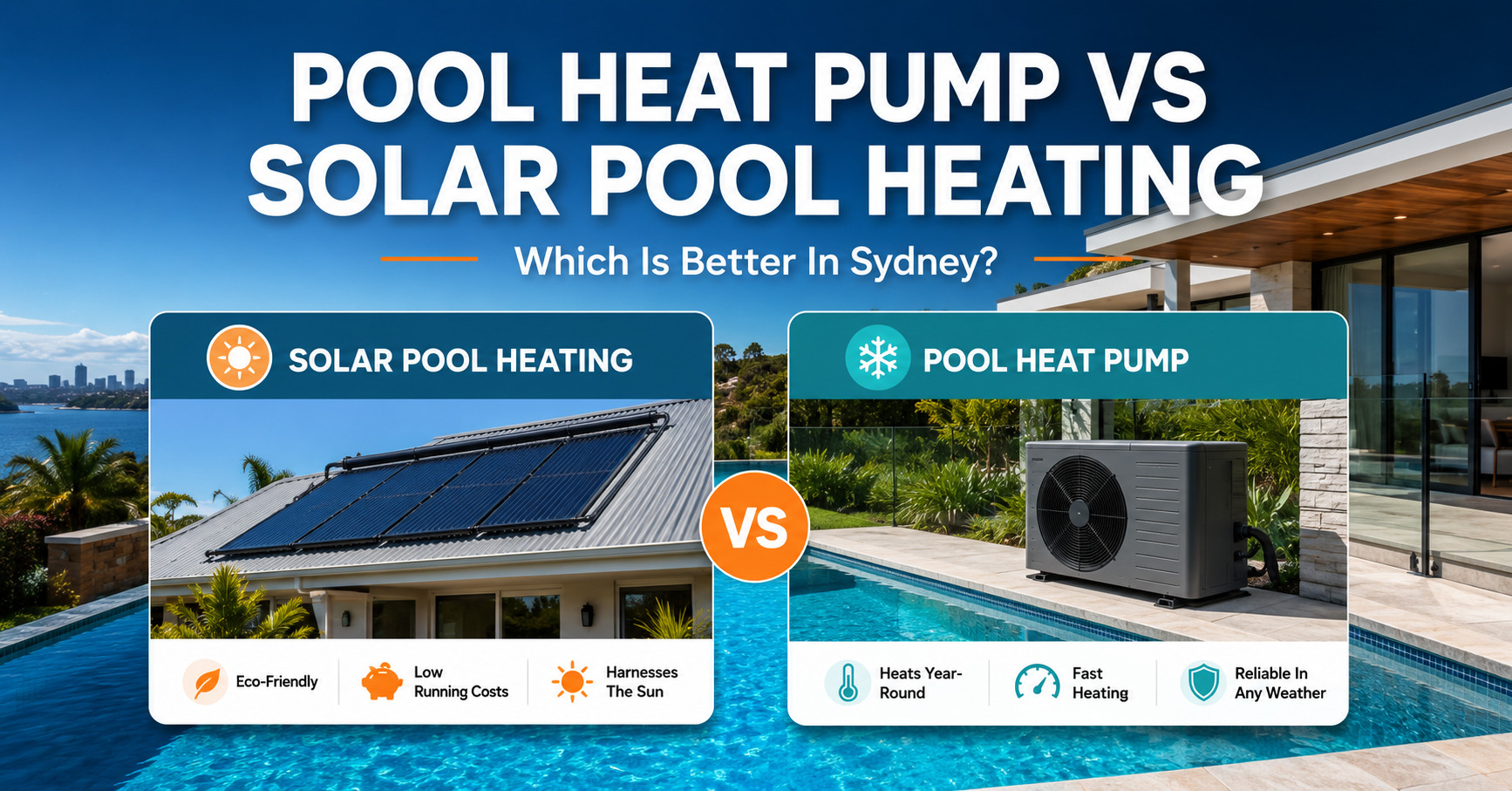




The main pool-heating options in Australia are solar thermal collectors, electric heat pumps and gas heaters. The right choice depends on how quickly you need heat, the months you want to swim, roof and equipment space, climate, target temperature and budget.
There is no single best heater for every pool. Compare each option against the same swimming goal and include both installation and operating conditions.
Start With Your Swimming Goal
- Do you want seasonal warming or a controlled target temperature?
- Will the pool be used daily, on weekends or only for events?
- How quickly must the water temperature rise?
- Which months do you expect to swim?
- Do you use a pool cover?
- Is there suitable roof, equipment and electrical or gas capacity?
Pool Heating Options Compared
| Option | How it works | Best suited to | Key considerations |
|---|---|---|---|
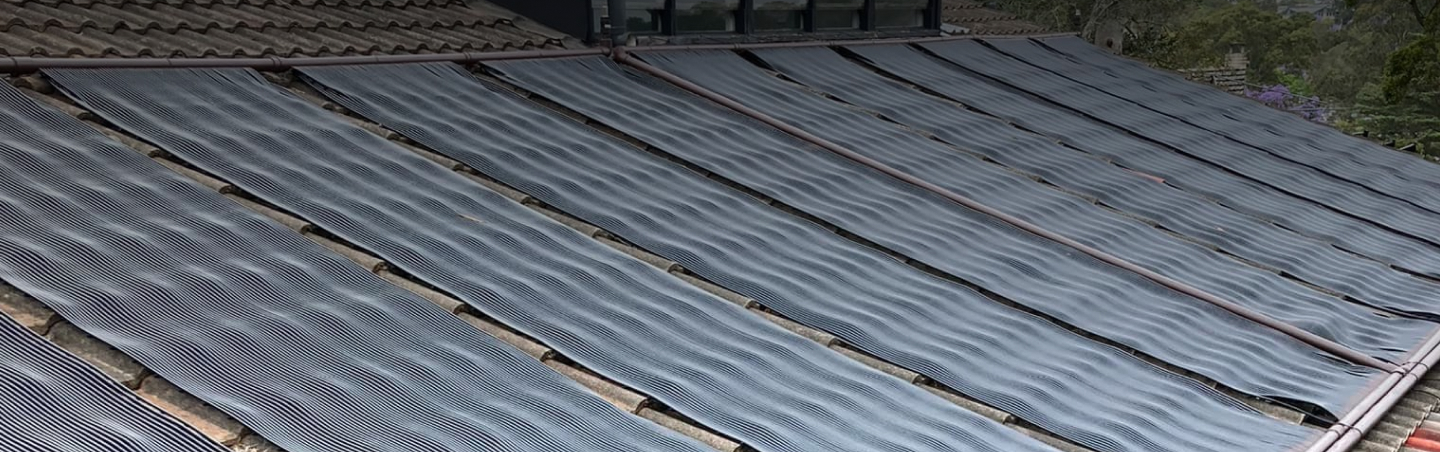
| Solar pool heating | Circulates pool water through roof-mounted collectors heated by sunlight. | Seasonal heating and extending swimming through warmer months. | Requires suitable roof space. Performance varies with sunlight, shade, weather and heat loss. |
| Electric heat pump | Transfers heat from the surrounding air into the pool using electricity. | Greater temperature control across changing conditions. | Requires correct sizing, airflow, drainage and sufficient electrical supply. |
| Gas pool heater | Burns gas to heat the pool water quickly. | Rapid heating, spas and occasional pool use. | Requires a suitable gas supply. Running costs can be significant with frequent use. |
| Combined system | Uses two heating methods, such as solar with a heat pump or gas heater. | Seasonal efficiency with additional temperature control. | Costs more to install and requires coordinated controls and maintenance. |
| Heat-retention measures | Uses a pool cover, wind protection, sensible settings and operating schedules. | Every heated pool, regardless of the heating system. | Reduces heat loss and may lower required heating capacity and operating time. |
How the Options Compare
Lowest direct heating-energy use
Solar generally relies on sunlight for heat, although circulation and controls may use electricity.
Most consistent temperature control
A suitably selected heat pump normally provides more control across changing conditions, within its operating limits.
Fastest heating
Gas is commonly chosen where rapid heating is the priority, particularly for spas or occasional use.
Best for limited roof space
A heat pump or gas heater may suit a property without adequate solar collector space, provided equipment and service requirements can be met.
Best for seasonal swimming
Solar can be a strong option when the goal is extending the season and the property has useful sun exposure.
Compare Total Cost, Not Just Purchase Price
Include equipment, installation, electrical or gas work, controls, expected energy use, servicing, warranties and likely replacement factors. Use the pool-heating running-cost guide to model energy use with current tariffs.
A cheap system that cannot meet the swimming goal is poor value. An oversized or unnecessarily complex system can also increase cost.
Questions to Ask an Installer
- How was the required heating capacity calculated?
- What weather and heat-loss assumptions were used?
- What site work is included in the quote?
- What electricity, gas, roof or airflow requirements apply?
- What operating cost assumptions are being used?
- What warranties and maintenance requirements apply?
- How will the controls be explained at handover?
Frequently Asked Questions
What is the best pool heater?
The best heater is the one that meets the required swimming season, temperature control and heating speed at an acceptable total cost for the property.
Is solar or a heat pump better?
Solar may suit seasonal heating with appropriate roof space, while a heat pump offers more control across changing conditions. Compare both for the same pool and usage pattern.
How long do pool heaters last?
Service life depends on the product, environment, installation, water chemistry, use and maintenance. Review the pool-heater lifespan guide for the factors affecting solar, heat-pump and gas equipment.
Should I use a pool cover?
A suitable cover can reduce evaporation and heat loss, helping any heating method operate less.
Choose a System for Your Property
Review the solar pool heating buyer guide, then contact Thermo Pools with the pool dimensions, location and swimming goals. We can compare suitable options and explain the assumptions behind a recommendation.