




Planning solar pool heater installation in Sydney starts with more than choosing a set of collectors. A suitable system must match your pool, roof, existing equipment and preferred swimming season. The installer then mounts the collectors, connects the feed and return pipework, sets up the controls and tests the completed system.
This guide explains each stage of professional installation, the checks that should happen before work begins and the questions to ask before accepting a quote. If you are still comparing systems, start with our solar pool heating buyer guide before deciding which design suits your property.
Quick Answer: What Happens During Solar Pool Heater Installation?
A typical solar pool heater installation follows six stages: assessing the pool and property, selecting the collector area, confirming the roof position, mounting the collectors, connecting the pipework and controller, and testing the completed system. The exact design and installation time depend on the roof, pool volume, pipe routes, equipment and site access.
How Does Solar Pool Heating Work?
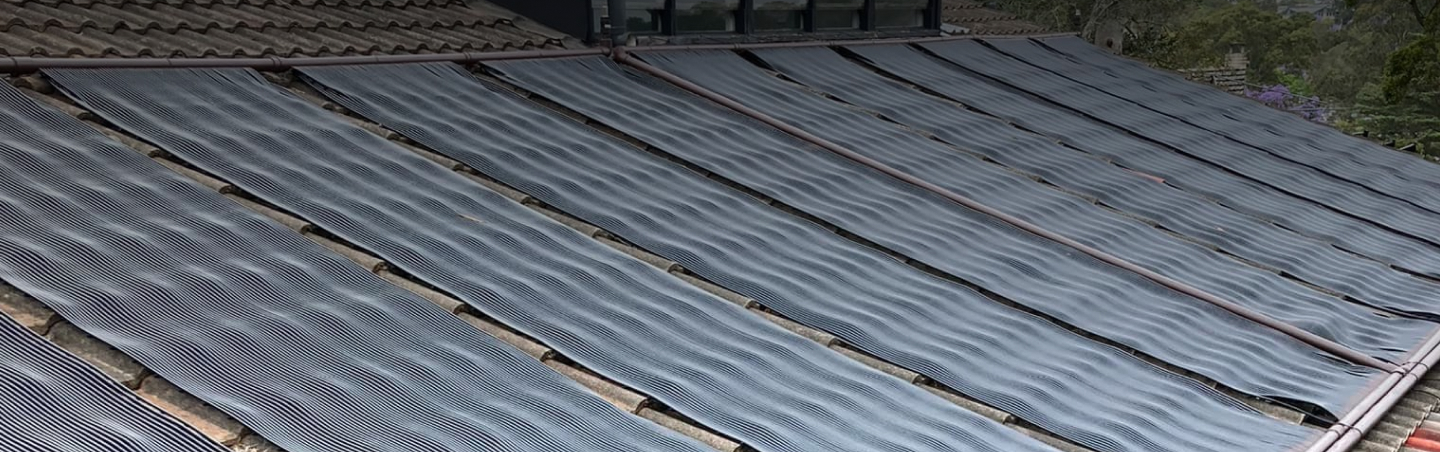
Solar pool heating uses available sunlight to warm pool water. Filtered water is directed through solar collectors, usually mounted on a suitable roof. It absorbs heat while moving through the collectors and then returns to the pool. This cycle continues when heating is required and the available solar energy can usefully increase the water temperature.
The system may operate through the existing filtration arrangement or a separate circulation setup, depending on the property and selected design. An automatic controller can compare conditions and manage when water circulates through the collectors.
Solar thermal collectors heat water directly. They are different from photovoltaic solar panels, which generate electricity. A site assessment should identify the correct equipment and explain how it will connect to the rest of the pool system.
What Should Be Checked Before Installation?
Pool size, volume and intended use
Pool surface area, water volume and target swimming season influence the required system. A household that wants to swim through spring and autumn may need a different design from one that mainly uses the pool in summer. The installer should also ask whether you use a pool cover, because covers can reduce heat loss.
Roof direction, usable area and shade
Collectors need useful sun exposure and a suitable mounting surface. In Sydney, a north-facing roof often offers favourable exposure, but east- and west-facing areas may also be workable. Roof pitch, roof material, surrounding trees, nearby buildings and seasonal shade must all be considered.
The roof position should be selected after inspecting the property. A generic drawing cannot account for actual shade, access, collector dimensions or pipe routes.
Existing filtration and plumbing
The installer should inspect the pump, filter, valves and existing pipework before proposing the new circuit. This establishes how filtered water will reach the collectors and return to the pool without creating an unnecessarily complicated installation.
Many existing pools can be assessed for solar heating. Read our guide to retrofitting solar heating to an existing pool for the additional issues that should be checked.
Electrical and access requirements
Roof access, controller location, pump requirements and any electrical work should be identified before installation. Where licensed electrical work is required, it must be completed by an appropriately qualified person.
The Solar Pool Heater Installation Process
Step 1: Inspect the pool and understand the heating goal
The process starts by confirming the pool dimensions, water volume, existing equipment and preferred months of use. The installer should discuss the temperature you expect, when the pool is normally used and whether wind exposure or shade causes additional heat loss.
This conversation helps define a realistic objective. Solar heating can extend the comfortable swimming season, but the result depends on the property, weather and system design.
Step 2: Assess the roof and plan the collector position
The installer checks usable roof area, direction, slope, material, shading and safe access. The proposed position should receive suitable sunlight and allow collectors and pipework to be installed securely and neatly.
If the preferred roof section is shaded or too small, the installer should explain the alternatives and how they may affect performance.
Step 3: Size and select the collectors
Collector sizing considers pool surface area, water volume, local conditions, roof direction, available space, heat loss and the desired swimming season. More collector area is not automatically the correct answer; the design should suit the pool and the collector technology.
Thermo Pools supplies Australian-made solar pool heating systems, including Thermorush and Thermotube. Product selection should follow a property assessment and a clear explanation of expected seasonal performance.
Step 4: Mount the collectors
The collectors are secured to the suitable roof or mounting surface with fittings designed for the chosen system and roof construction. Thermo Pools collector mounting hardware is designed to accommodate normal expansion and contraction while limiting unnecessary roof penetrations, subject to the selected system and roof.
Roof work must account for safe access, secure fixing and water management. Professional installation is recommended because the work involves height, large collector sections and integration with a circulating water system.
Step 5: Connect the feed and return pipework
The installer connects the collectors to the pool-water circulation system. A feed line carries filtered water towards the collectors, while a return line carries the warmed water back to the pool. Pipe routes and connection points vary between properties.
Pipework should be adequately supported and routed neatly. The installer should explain how the solar circuit operates alongside the existing pump and filter and identify any valves or other components the owner needs to understand.
Step 6: Configure the controller, test and hand over
Where an automatic controller is included, the installer configures it for the completed system. Testing should cover water flow, controller operation, connections, leaks and the interaction between the heating circuit and existing pool equipment.
The handover should explain normal operation, controller settings, basic inspection points and who to contact if the system does not operate as expected.
How Long Does Installation Take?
Installation time depends on roof access, collector area, pipe length, existing equipment, system design and whether preparation or additional licensed work is required. A straightforward installation can differ considerably from a property with restricted access or complex pipe routes.
Ask for an expected schedule after the site assessment. Avoid relying on a fixed timeframe quoted without inspecting the property.
What Affects the Installation and Running Cost?
The final quote may be affected by collector area, roof access, pipe length, controls, pumps, existing plumbing and any additional preparation. A clear quote should identify what is included and explain possible extra work.
Ongoing energy use also depends on the circulation arrangement, operating schedule, pool cover, weather and swimming season. Our pool heating running cost guide explains the main differences between solar, heat-pump and gas systems. Treat generic annual figures cautiously because tariffs and operating conditions vary.
What Performance Can You Expect in Sydney?
Sydney’s climate can make solar heating a practical way to extend the swimming season. Actual results depend on sunlight, air temperature, wind, shade, pool size, collector area, target temperature and heat loss.
A pool cover can help retain warmth, particularly overnight. Cloudy conditions provide less useful solar energy, so heating performance will vary. Solar heating should not be presented as a guarantee of a fixed pool temperature throughout the year.
Your proposal should explain realistic seasonal results for your pool. Any numerical performance comparison should identify the tested system, comparison baseline, conditions and measurement method.
Is Solar Installation Different From Heat-Pump Installation?
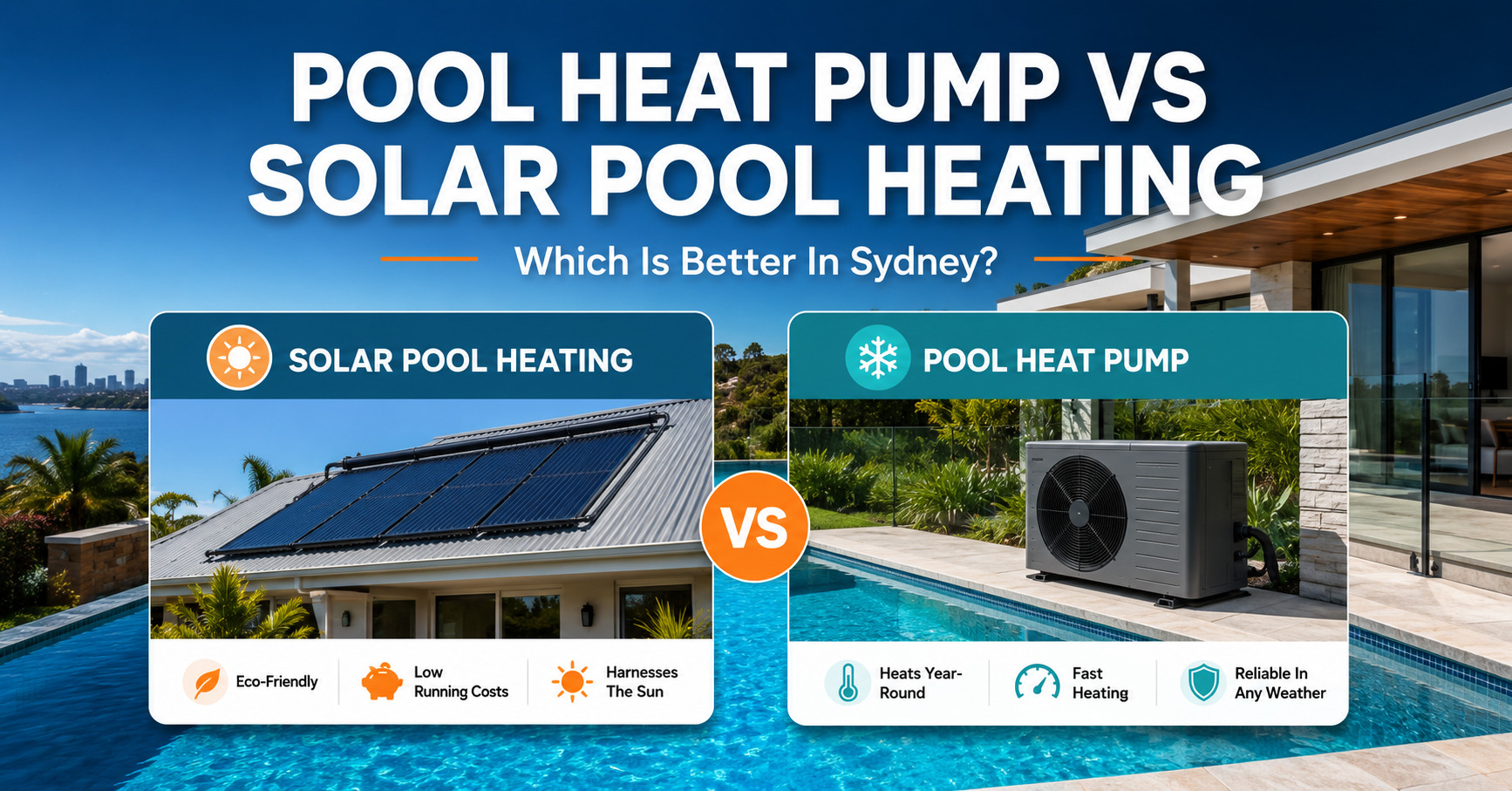
Yes. Solar pool heating normally uses roof-mounted collectors and pipework that circulates pool water through them. A pool heat pump is a separate powered appliance installed near the pool equipment, with requirements for airflow, drainage, clearances, electrical supply and noise management.
If reliable heating in a wider range of weather conditions is the main priority, compare solar heating with pool heat pumps before choosing the installation type.
Questions to Ask Before Accepting a Quote
- Which roof area and collector size are being proposed, and why?
- How were pool size, shade, heat loss and swimming-season goals considered?
- How will the solar circuit connect to the existing pump, filter and pipework?
- Are controllers, valves, pump or electrical works included?
- What roof access or preparation is required?
- What seasonal performance should reasonably be expected for this property?
- What warranties apply to the collectors, fittings, controls and installation work?
- What is excluded from the quoted price?
- Will the installer demonstrate the controls and completed system?
Why Choose Thermo Pools?
Thermo Pools is an Australian-owned pool-heating business serving Sydney and nearby areas. We supply Australian-made solar solutions and provide installation, servicing and repairs. The recommended design is based on the pool, roof, property layout and intended use rather than a standard arrangement for every home.
Whether the project involves a new pool or an existing system, the team can assess collector placement, pipe routes, equipment and controls before preparing a recommendation.
Frequently Asked Questions
Can solar pool heating be installed on an existing pool?
Many existing pools can be assessed for solar heating. Suitability depends on collector space, roof conditions, pipe routes, existing equipment and the intended swimming season.
Does a solar pool heater need a north-facing roof?
Not always. A north-facing roof often provides favourable exposure in Sydney, but east- or west-facing areas may also be considered. The decision should account for shade, available area and the selected collector system.
How much roof space is needed?
There is no single area that suits every pool. Sizing depends on the pool, collector design, roof direction, climate, shade, heat loss and the months in which you want to swim.
Can solar pool heating work on cloudy days?
Performance depends on the available solar energy. Some useful heating may occur in suitable conditions, but the result is normally lower when sunshine is limited.
Can I install solar pool heating myself?
Professional installation is recommended because the work can involve roof access, collector mounting, plumbing, circulation equipment, controls and licensed electrical work.
Will solar heating keep a pool warm throughout winter?
Solar heating is generally used to extend the swimming season. Winter results depend on weather, heat loss, collector area and system design, so a consistent winter temperature should not be assumed without a property-specific assessment.
Plan Your Solar Pool Heater Installation
If you are considering solar pool heating for a Sydney property, contact Thermo Pools to discuss your pool, roof and preferred swimming season. We can assess the installation requirements, explain suitable options and prepare a property-specific quote.